Every modern automobile depends on an intricate network of chassis components to deliver a smooth journey, stable handling, and dependable stopping power. When these mechanical assemblies function in harmony, motorists enjoy effortless control over their automobiles, gliding across asphalt without feeling every minor imperfection on the highway surface. However, continuous exposure to harsh road hazards, deep potholes, seasonal temperature fluctuations, and constant friction gradually takes a toll on even the most rugged undercarriage assemblies. As critical parts deteriorate over time, the vehicle begins to lose its road manners, displaying warning signs that compromise passenger comfort and vehicular safety. Understanding the early warnings of chassis deterioration allows drivers to seek timely steering and suspension repairs before minor component damage escalates into dangerous road failures or massive restoration bills. Investing in routine vehicle inspections ensures that subtle shifts in performance get identified long before they compromise everyday driving stability.
Inspecting Damaged Shocks and Worn Struts
The dampening assemblies situated beneath a vehicle serve the vital duty of absorbing road impacts and keeping the rubber tread firmly glued to the pavement. When shock absorbers and structural strut assemblies begin to degrade, the vehicle loses its ability to cushion sudden changes in elevation. Drivers frequently report that their vehicle bounces repeatedly after rolling over modest speed humps or dips in the road. In addition to a bouncy ride, deteriorating struts frequently cause noticeable body roll when cornering, as well as an alarming nose dive when applying the brakes with force. Such unstable movement does not merely make the trip uncomfortable for passengers; it drastically lengthens braking distances and reduces emergency avoidance capabilities. When these symptoms arise, scheduling professional steering and suspension repairs restores crucial stability, preventing unnecessary strain on neighboring chassis linkages.
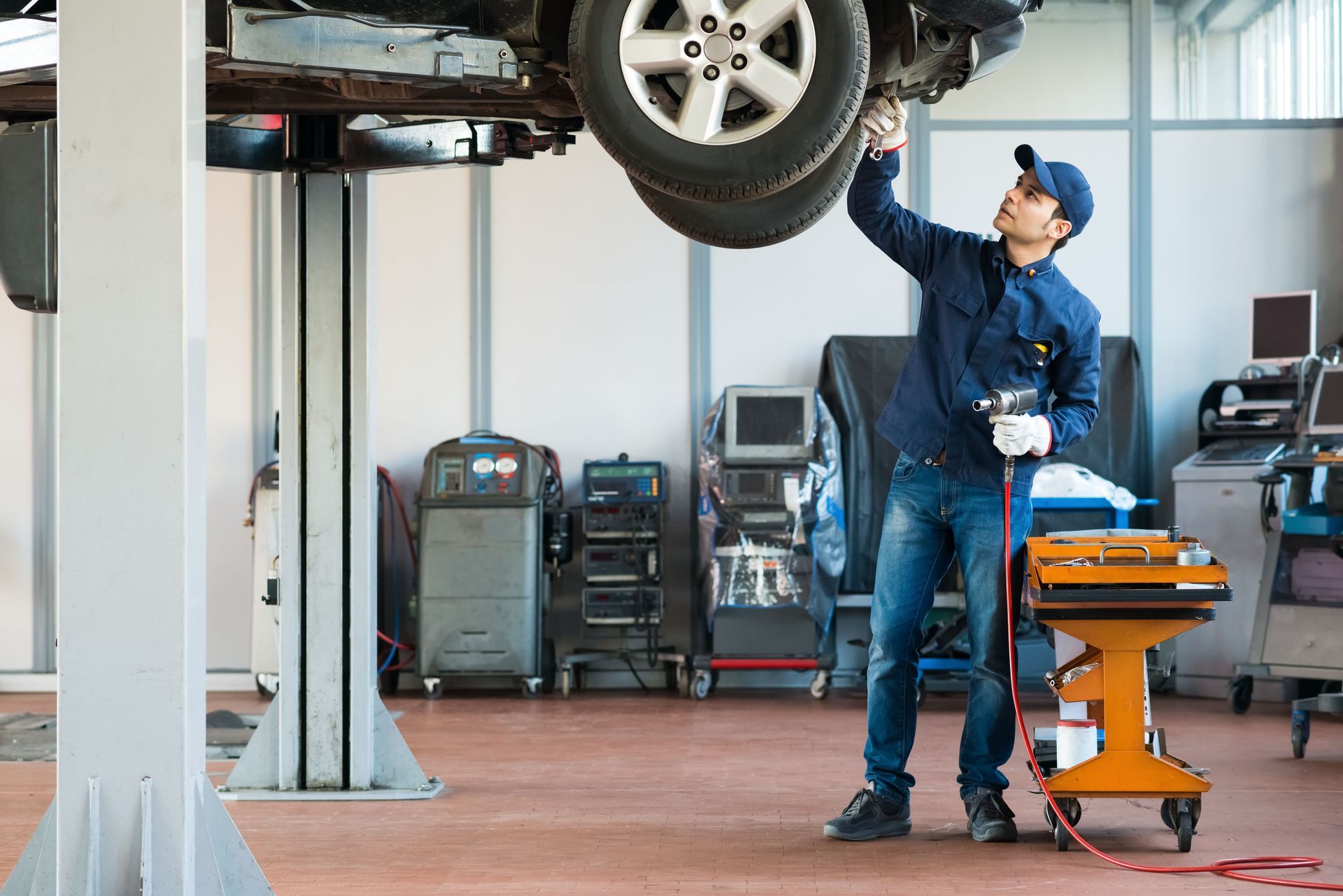
Visual inspection beneath the wheel arches often reveals distinct physical clues indicating that dampening components have reached the end of their operational lifespan. A healthy strut or shock absorber features a clean metal housing, whereas a failing unit frequently shows wet spots or thick coats of road grime clinging to leaking hydraulic oil. Furthermore, degraded shocks compromise the ability of the tire tread to remain evenly seated against the street, creating erratic wear patterns across the circumference of the rubber. Driving on damaged tires generates an annoying humming sound that increases in volume as speed climbs. Promptly addressing these dampening faults through comprehensive steering and suspension repairs prevents premature tire replacement and preserves the structural health of the entire vehicle framework.
Identifying Loose Joints and Cracked Bushings
Suspension joints and rubber bushings operate as the flexible pivot points of the automotive chassis, facilitating controlled movement while dampening unwanted vibration. Ball joints feature a metal sphere encased inside a lubricated socket, allowing the steering knuckles to pivot smoothly during turns. Over time, internal lubrication dries out or protective rubber boots rupture, allowing abrasive dirt and moisture to grind away at the precision metal surfaces. When excessive play develops within these joints, drivers will notice disturbing clunking or knocking noises when navigating rough pavement or turning the steering wheel. Ignoring these audible warnings invites severe danger, because a completely separated joint can cause the entire wheel assembly to detach from the vehicle, resulting in immediate loss of directional control. Qualified mechanics prioritize these pivot points during routine steering and suspension repairs to prevent catastrophic mechanical failures.
Complementing these metal joints are numerous rubber and polyurethane bushings installed throughout control arms, sway bars, and subframe mounts. These elastomeric cushions insulate the passenger cabin from intense road vibrations while holding heavy metal components in exact alignment. Exposure to engine heat, motor oil leaks, road salt, and ozone causes this rubber compound to harden, crack, and tear apart over prolonged highway travel. Degraded control arm bushings introduce sloppy handling, vague steering response, and unsettling squeaks whenever the vehicle encounters minor pavement imperfections. According to Fairground, The average age of light-duty vehicles on U.S. roads is roughly 12.6 years, increasing wear-and-tear failures on legacy hydraulic seals, pumps, and aging electronic steering racks. Timely steering and suspension repairs focused on fresh bushings restore tight handling precision and eliminate annoying chassis rattles.
Correcting Misaligned Wheels and Damaged Tires
Maintaining proper wheel alignment ensures that all tires travel in precise parallel alignment relative to each other and perpendicular to the road surface. Unfortunately, everyday commuting realities such as striking curbs, hitting unexpected road debris, or traversing severe potholes can easily knock sensitive alignment angles out of factory specification. When camber, caster, or toe measurements drift away from optimal standards, the vehicle tends to pull or drift toward the side of the highway rather than traveling straight ahead. Motorists often find themselves constantly applying steering corrections just to keep their car within the intended lane, which creates unnecessary driver fatigue over long road trips. Recognizing drifting tendencies early on highlights the immediate necessity for specialized steering and suspension repairs to preserve vehicle safety.
Beyond irritating handling issues, misaligned wheels rapidly destroy expensive sets of tires by concentrating friction along narrow strips of the tread. Improper camber angles cause excessive wear along the inner or outer shoulders of the tire, while incorrect toe settings create feathering, where the tread blocks wear down at sharp angles across the tire width. This rapid and uneven tread loss dramatically reduces wet-weather traction, leaving the vehicle vulnerable to hydroplaning during heavy rainstorms. Incorporating precision computerized alignment during steering and suspension repairs corrects improper geometry, restores straight-line stability, and maximizes the lifespan of expensive tire investments. Regular alignment checks should always accompany any major undercarriage work to ensure the automobile travels straight and true.
Addressing Leaking Racks and Bent Linkages
The steering mechanism forms the direct communication channel between the hands of the driver and the direction of the front wheels. Whether an automobile utilizes traditional hydraulic assistance or modern electronic power steering, several mechanical linkages must work without excess play. Tie rod ends link the central steering gear to the steering knuckles, translating every turn of the wheel into immediate wheel angle changes. As inner and outer tie rod ends wear out, the steering wheel develops excessive slack, requiring noticeable turning input before the front tires respond. A loose steering sensation makes high-speed highway driving feel unpredictable and hazardous, especially during sudden maneuvers. Scheduling timely steering and suspension repairs to replace damaged tie rod assemblies restores crisp feedback and predictable vehicle responsiveness.
Hydraulic steering configurations introduce additional points of wear, specifically concerning pressurized fluid delivery and internal seal integrity. High-pressure hydraulic fluid circulates between the engine-driven pump and the rack assembly to assist driver effort during low-speed maneuvers. Over prolonged operation, internal seals degrade, resulting in fluid puddles beneath the engine bay, groaning noises during tight parking turns, and sudden increases in steering effort. If fluid levels drop significantly, the hydraulic pump risks catastrophic failure from metal-on-metal friction and air intrusion. Addressing fluid leaks promptly through professional steering and suspension repairs safeguards expensive steering racks and preserves smooth assistance. Consistent preventative maintenance keeps these complex mechanical networks operating safely through every season.
Maintaining a dependable chassis requires ongoing vigilance, timely mechanical intervention, and a deep appreciation for the complex interplay between undercarriage components. Allowing worn shocks, failing ball joints, bent linkages, or leaking steering mechanisms to go unaddressed places vehicular safety at severe risk while accelerating the destruction of surrounding mechanical parts. When an automobile exhibits drifting tendencies, mysterious clunking sounds, or loose handling, seeking expert steering and suspension repairs protects the monetary investment in the automobile as well as the lives of those traveling inside. Proactive maintenance ensures every commute remains smooth, predictable, and remarkably safe regardless of challenging highway conditions. If you notice any of these troublesome warning signs in your personal vehicle and desire top-tier care, please feel free to reach out to the friendly team at Pleiades Automotive.